
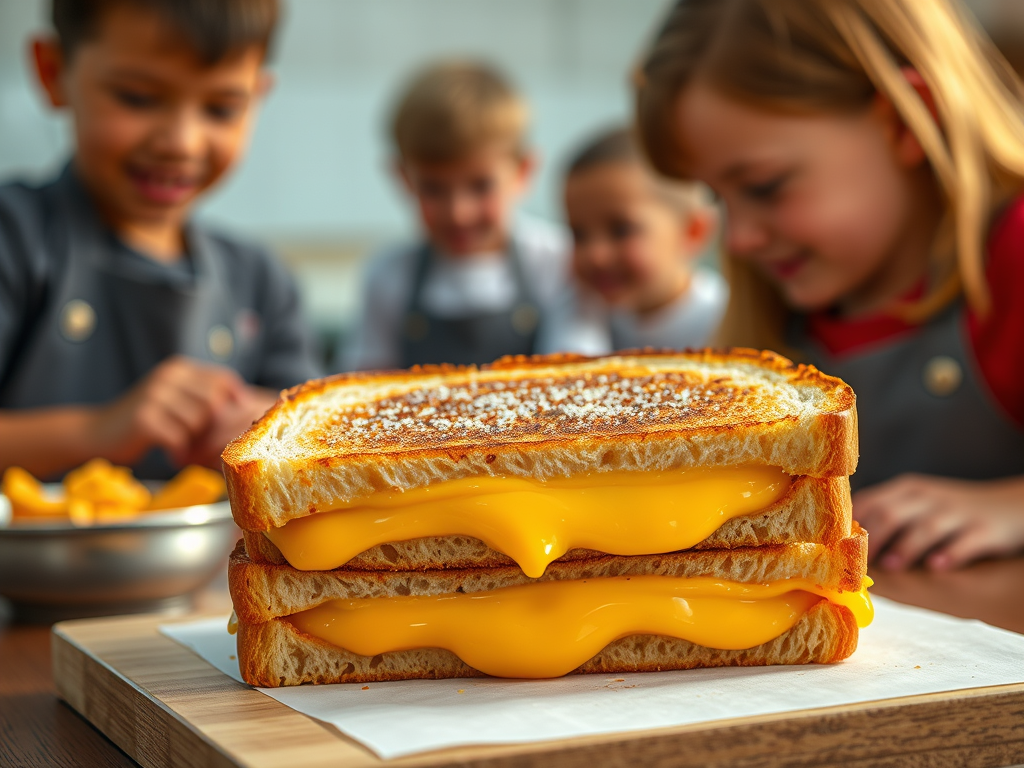
I love sandwiches. I love sandwiches so much that I dream of someday opening a sandwich shop. Which is probably why even though I have zero minutes to open my dream shop, grilled cheese has crept into my thoughts about teaching. You see, I think great teaching is a lot like grilled cheese. Let me explain.
I have come to view great teachers as experience creators. Teachers craft the experiences that students engage in that allow them to learn and to grow. This act of creating experiences is a purely creative art. Curriculum and lessons don’t come from a purchased resource. And if anyone tells you that they do, feel free to tell them I said they’re wrong. Everything we know about great teaching points to the fact that teachers must be trusted to be the dynamic creators of rich experiences centered on the individual needs and interests of their students.
As experience creators, we must be great at creating the experiences that students will learn from. So here comes the first connection to grilled cheese. It’s my grilled cheese challenge. If you had to create a lesson to teach a class of 20 students to make the world’s best grilled cheese sandwich in an 80 minute period, what would your plan be? How would you write a lesson from start to finish that would ensure that at the end, all 20 students could make the world’s best grilled cheese?
Hopefully I have you thinking about my grilled cheese challenge. I hope it has you considering the individual components of this lesson and how you would go about setting up your plan. I’m really a teaching nerd and love thinking about things like this. Maybe you want to fully humor me, take a pause, and sketch out your lesson. Or, maybe you want to just keep reading and see where I’m going. Either way is fine but I hope at some point you’ll accept my grilled cheese challenge and craft your ideal lesson.
When thinking about the perfect lesson to teach students how to make the best grilled cheese, there’s a lot to consider. I believe there are several elements that should be part of any great lesson. The lesson model I present here will be the grilled cheese model. Any great lesson resembles a grilled cheese. In the spirit of grilled cheese, let’s call the individual elements the top bread, the guts, and the bottom bread. I know, I’m a bit crazy, but I hope you’re still with me because I love this model and have been thinking a lot about it lately.
Top Bread
The top bread of the grilled cheese sandwich is where you see what it’s all about. It’s the face of the sandwich and how it’s judged. It’s the first thing you see and the first thing you bite into. It has to look and taste great. It has to be toasted to a golden brown and be crisp. And, it can’t last forever because there’s much more to that sandwich than just the top bread.
The Who, the What, the Why + The Goal
The top bread of the sandwich is the introduction to the lesson. One hundred years ago, when I first learned the elements of lesson planning, this was called the anticipatory set. And while that term still holds up, I think we can do better. The top bread of your lesson must contain the who, the why, and the what in that order. You’ve also got to clearly communicate the measurable goal of the experience to everyone in the room. The who is who you’re teaching. You can’t teach a lesson without starting with the learners. Ideally, you’ll know a lot about them before planning the lesson. But, either way, who should be part of the plan and the planning process? If we don’t think about who we are, we are missing the point of student-centered education. That cannot just be a buzz word. It has to be the reality of what we do. Who the students are must shape everything else.
The why is next. The why is focused on hooking the students and explicitly telling them why this lesson is essential for their lives. This hook has to be great. It has to relate to the who that you already considered, and it has to appeal to the lives of the students in the room. The hook is big. The hook is interesting. The hook has to be awesome. The hook is the show and you can’t disappoint here. Finally, after delivering the why in the form of the hook, you’ve got to get to the what. What is the explanation for students of what you’re about to do during the lesson? This is the preview of the experience. If you’ve done your job and created a great top piece of bread, students have seen the preview of the sandwich, loved what it looks like, and bit in enough to want to keep going to the guts.
Finally, you have to deliver the goal of the lesson. Everyone in the room must be clear on this. You’ve got to be clear on it to. And, you have to be able to assess wether you’ve accomplished the goal or not by the end of the lesson.
The entire top bread of the lesson should last no more than five minutes. This is your chance to hook the learners, get them excited, and move on to the good stuff. You don’t want to linger here because you’ll lose the audience. If they wanted a piece of toast they could have gotten that somewhere else. They’re here for the whole beautiful sandwich and you have to get to the good stuff quickly.
The Guts
I’m calling the inside of the sandwich here because I think it can be more than just cheese. I’m sure you’ve seen plenty of gourmet grilled cheese sandwiches or even added some extra ingredients to your sandwich. There’s a guy on Tic Tok that has devoted his life to the grilled cheese and makes them with all kinds of crazy ingredients. No matter what’s in the guts, it has to be good. The standard grilled cheese which includes a piece or two of Kraft singles in between a couple slabs of white bread, always gets the job done for me. But no matter what cheese or extra ingredients are part of the guts, you want them to be warm, creamy, and delicious. The guts of the sandwich are really why you’re there in the first place. Without the guts you’ve just got a couple pieces of bread and that’s no sandwich.
The How
Once you’ve delivered the who, what, and why as part of the top bread, you’re ready to get down to business and deliver the experiences that are going to teach the concept. And here’s the one big key that is directly related to the whole grilled cheese model. The contents of the guts have to be directly dependent on your audience. You’re not going to use a Kraft single if the person you’re making the sandwich for hates processed American cheese. I think there’s probably a cheese combination for everyone out there and it’s your job to figure out what that is and get it in the sandwich in the right way for them.
I already told you I’m a teaching nerd. But I’m also a bit strange, which means I spent the last few days asking everyone I came in contact with if they liked grilled cheese. I asked a lot of people and not a single one told me they didn’t like grilled cheese. I talked to people who liked them all different ways, including vegan options, but everyone likes them and everyone likes them a bit differently. What’s this mean for the guts of the lesson you ask? Let me tell you what I think.
I think the guts of the lesson have to have variety that is directly related to the needs of the learner. Too often we put together a lesson and just serve up the two pieces of white bread and a kraft single. We assume this is good enough and will appeal to the widest variety of people. But this version of the sandwich is not the world’s best. It’s not related to a deep understanding of what each student in the room needs. They all need something different and all deserve to have the world’s best sandwich for them. We can’t settle for a Kraft single. We have to understand what they need and what they think is great and go there with them. Yep, we might have to expose them to 20 different kinds of cheese and options to make sure we create the great sandwich for them, but that’s the job. The job is making a great sandwich for each individual every day.
Let me bring the sandwich model back to the real world of the classroom here. One of the biggest struggles I see teachers have is how to meet the needs of individual learners with their lessons. Most lessons seem to be designed to get to the center of the bell curve. But there’s a better way. The best lesson, the lesson that meets each individual’s needs, is full of small group instructional periods that allow for individual intelligences, interests, and needs to be met. The guts of our lessons have to be filled with options, choice, opportunities for group exploration, and individual growth. There are a lot of big ideas there and I’ll clarify those when I present what I think is a great lesson to teach how to make the world’s best grilled cheese at the end of this post. For now, please know that the guts of the lesson is filled with variety, choice, and opportunities to grow socially and individually. The guts must all be directly related to the goal of the lesson and be laser-focused on ensuring that the goal is accomplished.
The Bottom Bread
The bottom bread of the grilled cheese holds the whole thing together and lets you know that it’s over. The bottom bread is essential. Just like the top bread, it has to be on point. It has to have a perfect golden brown crisp. It can’t stay around too long because once you’ve made it to the bottom bread you’re sandwich experience is about finished. But it’s the last thing you’re ever going to taste. It’s super important that the last taste leaves the right impression. It’s how you’ll always remember the sandwich.
What
The bottom bread of the lesson is vital. It puts an end to the lesson. A great lesson can’t just stop. It must end with a restating of the learning goal. Students must be reminded what they did and what they learned. This, like the top bread, needs to be short, sweet, and to the point. The bottom bread can’t linger but it needs to be there or the whole sandwich falls apart. I see so many lessons just end when the bell rings. To be a great lesson can’t just end. It needs to have a great beginning, middle, and end. The bottom bread is almost the end. But any great sandwich needs to be reviewed. The cook needs to know if the sandwich was great or not and that’s the very last step of the sandwich model. The Review.
The Review
I’ve had bad grilled cheese sandwiches. It hasn’t been often but it has happened. Sometimes the bread is burnt on the cheese isn’t melted. Both of those things are grilled cheese killers. But if I’m the cook of the sandwich and I never ask whoever is eating the sandwich if they liked it or not, I never know how I did.
We can’t send a student away from any lesson without knowing what they’re review is. The real review of our lesson is if the student accomplished our learning goal or not. Too often we waited a few days or even a few weeks to find out if learning has occurred. This can’t happen. We must get the review before the lesson ends. I could never cook up grilled cheese sandwiches for my family for a few weeks without asking them what they thought. This would make absolutely no sense. And I better never think that I don’t care what they think and I m going to just keep serving the sandwich the way I want to make it.
If you take one thing away from the Grilled Cheese Sandwich post, it’s this: You must survey your students at the end of every lesson. This learning check is essential. The check is directly related to your goal for that lesson. It lets you know how the students did, but, more importantly, it lets you know how you did. If the sandwich wasn’t delicious, it’s got to change for the next day or you’re going to lose your customers real quick. You must do a learning check for every lesson and then make adjustments in your future lessons based on that check. This is the key to a great lesson and will help you be great every day.
So that’s it. Grilled Cheese and Teaching. I love the model and hope it helps you think purposefully about teaching and an amazing lesson. Every single teacher can design amazing learning experiences and then deliver them to their students. This isn’t a suggestion. It’s the mission. We’ve got this. Our students depend on it. For the last part of the post I’m doing to take the Grilled Cheese Challenge and see what my best lesson looks like. Feel free to read through what I’ve come up with a nd take the challenge yourself. I’d love to see you’re ideas on how to teach students to make the world’s greatest grilled cheese sandwich.
The Grilled Cheese Challenge Lesson
Top Bread (Who, What, Why)
Who
A group of 20 kids. They’re in middle school.
Why (Hook)
When I think of grilled cheese, two really clear images come to mind. First, I see the go-to in a crunch, mom’s making lunch grilled cheese at my kitchen table. My mom made a good grilled cheese. I can see it sitting there right now ready to eat. Now the unique thing about my mom’s grilled cheese was she would always put mustard on the outside of one half and jelly on the outside of the other. That’s what a classic grilled cheese is to me.
And then, about 10 years ago I had an amazing grilled cheese from the Reading Terminal Market in Philadelphia. This was not my mom’s grilled cheese. The bread was thick and perfectly toasted. The cheese in the middle was deep orange, thick, and stringy. By the time the sandwich made it to me the cheese had a couple of minutes to set up so it wasn’t quite running and not quite set up. The sandwich was perfect and I’ve wanted another ever since.
What
Today, I’m going to teach All of you how to make the world’s best grilled cheese sandwich. You want to know how to make this sandwich because you can eat it yourself, make it for others, and maybe even feed it to your kids someday. Grilled cheese is a great sandwich that everyone likes. Now let’s get into making the best. By the end of the lesson, you’ll have made the world’s best grilled cheese sandwich.
How
Before we can go any further, we need to figure out what the world’s best grilled cheese sandwich is. (Ask class for ideas about this)
Question: Is there one best grilled cheese sandwich? The class should eventually arrive at the conclusion that the idea of the best is in the perception of the individual. As such, we will need to figure out what everyone likes. Small groups of students will determine what type of bread, cheese, and filling would be best for them. They can take five minutes to research great grilled cheese sandwiches if they like.
The class will then be divided into small groups based on sandwich element preferences. The components of making a great sandwich have been identified and broken into individual components. These components will become small group stations where students are able to practice the skills needed to craft a great sandwich.
Station 1: Buttering the bread – Students will learn the best technique for buttering the bread and practice it here. They will practice until each group member has perfected the technique. This practice will include exploration of different techniques and different butters.
Station 2: Adding the guts- What makes the ideal middle? Students will experiment with different combinations based on their preference. They will also experience different placements and thicknesses. Groups will practice at this station until they’ve arrived at what they believe is the best middle.
Station 3: Cooking the Sandwich-How do you cook the perfect sandwich? STudents will learn how to cook the sandwich on each side, flipping it at just the right time. Students will practice these skills until perfected.
Station 4: Plating and cutting- What’s the best way to present and cut the sandwich? Students will work on presenting their sandwich and cutting it in the best possible way.
Station 5: Research and Prep: Students will finalize their sandwich plan. They will research the bread and filling. They will decide what they think makes a great sandwich so that they can test out their ideas during the cooking of their sandwich.
After rotating through the five skill prep stations, student groups will head to their cooking station and prepare their sandwich. They will apply the skills that they’ve learned to create their best possible sandwich.
After cooking, students will be reminded of what they’ve accomplished. They will understand that they’ve determined what would be the best grilled cheese sandwich and then worked to prepare just that. Certainly, cooking is a journey, but they’ve acquired new skills that they can continue to hone if their desire to make the world’s best sandwich.
The lesson will conclude by the group and the teacher eating their sandwich. The group and teacher will complete a rubric based on the components of the sandwich. Together, the students and the teacher will determine if the group has accomplished their goal of cooking the world’s best grilled cheese sandwich.
 Miles O'Shea